The Autonomous Pivot: Beyond Simple Automation
The release of Amazon’s Kiro marks a critical inflection point in enterprise technology: the transition from assistive tools to autonomous digital teammates. Unlike traditional generative AI that waits for the next prompt, Kiro is engineered to execute complex, multi-day workflows without human intervention. This capability fundamentally alters the operational calculus for software development, shifting the bottleneck from code generation to strategic architectural oversight. Leaders must now view AI not as a tool for acceleration, but as a scalable workforce capable of maintaining state and context over extended durations.

This shift represents more than just incremental efficiency; it creates a new layer of operational leverage where "work" is decoupled from human hours. As detailed in TechCrunch's analysis of the launch, Kiro can independently navigate codebases and resolve issues over periods ranging from hours to days, effectively functioning as a tireless developer. For CTOs, this necessitates an immediate reevaluation of resource allocation, allowing human talent to focus on high-level system design while agents handle the implementation grind.
Amazon is leveraging these agents not merely as features, but as a strategic wedge to reclaim dominance in the cloud infrastructure battleground. By integrating agentic capabilities directly into the AWS ecosystem, they are raising the barrier to entry for competitors who lack the underlying compute infrastructure to support such persistent workloads. Forbes's report on AWS's market strategy notes that this "agentic boost" is central to Amazon's push to regain market share, signaling that the future of cloud computing is inextricably linked to autonomous execution.
However, the introduction of persistent agents introduces a "Black Box Paradox" for leadership. While efficiency metrics may skyrocket, the opacity of decision-making within a multi-day autonomous session creates new risks regarding compliance and code provenance. Organizations must now balance the allure of zero-marginal-cost development with the imperative of rigorous oversight frameworks to ensure these powerful agents remain aligned with business objectives.
From Code Generation to Strategic Architecture
The deployment of autonomous agents like Kiro signals a fundamental departure from the "copilot" era—where humans constantly prompt machines—to an "agentic" era where humans define outcomes and review results. This transition elevates the role of the technologist from a syntax manager to a strategic orchestrator. By offloading the cognitive burden of routine implementation, these agents allow professionals to reclaim hours previously lost to "digital friction" and context switching.

The Elevation of the Engineer
The immediate impact is most visible in software engineering, where the definition of "work" is being rewritten. VentureBeat's analysis of the engineering landscape suggests that this shift forces software engineers to evolve into system architects. Instead of writing individual functions, developers now manage comprehensive specifications, effectively moving up the abstraction ladder to focus on business logic rather than boilerplate implementation.
This creates a new operational paradigm:
- Cognitive Leverage: Engineers spend time on why code exists, not how it is written.
- Asynchronous Productivity: Projects progress while the human team sleeps, creating a 24-hour development cycle without human burnout.
- Spec-Driven Development: Success now depends on the clarity of the prompt and architecture, not the speed of typing.
Autonomous Defense and the Competency Trap
Beyond development, these agents are transforming cybersecurity from a reactive panic to a proactive discipline. Wired reports on Amazon's use of specialized agents for deep bug hunting, noting that these tools can autonomously navigate complex threat landscapes that would exhaust human analysts. By automating the "deep dive" into legacy code to find vulnerabilities, security teams can focus on threat modeling rather than patch management.
However, this transformation introduces a critical risk: The Competency Crisis. As agents handle increasingly complex tasks autonomously, junior professionals may lose the opportunity to learn through "grunt work." Organizations must be wary of hollowing out their talent pipeline; if humans stop writing code, they may eventually lose the ability to effectively audit the work of their digital teammates.
The Agentic Shift: From Co-Pilot to Captain
The transition from generative AI to agentic AI represents a fundamental restructuring of digital labor. While previous iterations of AI functioned as "co-pilots"—awaiting specific prompts to generate discrete outputs—Amazon’s new frontier agents operate as autonomous entities capable of pursuing high-level goals over extended timelines. This shift effectively changes the unit of compute from "task completion" to "outcome delivery."

Operationalizing Autonomy
The defining characteristic of Amazon’s Kiro and its companion agents is temporal persistence. Unlike standard Large Language Models (LLMs) that reset context with every new session, these agents maintain a continuous memory of project architecture, business logic, and stakeholder goals. CRN highlights Kiro's capacity to code independently for days, navigating complex repositories to resolve issues that require deep contextual understanding rather than surface-level pattern matching.
This capability allows the agent to function less like a spell-checker and more like a senior engineer. It can:
- Ingest a high-level feature request.
- Map dependencies across a fragmented codebase.
- Propose architectural changes.
- Execute the code generation iteratively until the build passes.
The Spec-Driven Development Model
The mechanism driving this autonomy is what Amazon calls "spec-driven development." Instead of generating code directly from a vague prompt, the agent first translates natural language requests into detailed technical specifications. Amazon's official release details how Kiro utilizes this intermediate layer to align on design before writing a single line of syntax, mirroring the workflow of human development teams.
This intermediate step serves as a critical governance layer. By forcing the AI to "show its work" via a specification document, human overseers can validate the strategic direction without needing to micromanage the tactical implementation. It transforms the human role from "coder" to "architect," where the primary value add is approving the blueprint rather than laying the bricks.
The "AI Factory" Ecosystem
This development is not an isolated software release but part of a broader infrastructure strategy. Geekwire reports on Amazon's rollout of "AI factories" alongside these agents, suggesting a future where enterprise compute power is dedicated not just to hosting applications, but to housing the digital workforce that builds them.
However, this introduces the "Black Box" Efficiency Paradox. While spec-driven development offers transparency, the sheer volume of code an agent like Kiro can produce in 48 hours of autonomous operation may overwhelm a human review team. If the output velocity of the agent exceeds the audit velocity of the human, organizations risk deploying functional but opaque systems that no living employee fully understands. The strategic imperative, therefore, is not just deploying these agents, but building the "observability infrastructure" to ensure their autonomy remains aligned with enterprise risk tolerance.
Unlocking Autonomous Agency: The Persistent Context Engine
The fundamental shift represented by Amazon’s new frontier agents is not merely an increase in processing speed, but a transition from stateless queries to stateful missions. Traditional Large Language Models (LLMs) operate transactionally, resetting their memory buffer after each interaction. In contrast, agents like Kiro function as persistent digital employees, maintaining a complex "mental model" of a project’s architecture, goals, and constraints over extended operational periods.
This persistence is powered by Amazon’s underlying Nova models, which provide the reasoning capabilities necessary for long-horizon task execution. According to Wired's analysis of the AGI Lab's reveal, these agents utilize advanced web browsing and tool-use capabilities to gather context independently, effectively bridging the gap between abstract instruction and concrete execution. This allows the system to move beyond simple code completion to full-stack architectural autonomy.
The Spec-Driven Development Model
The operational core of Kiro lies in its "spec-driven" methodology. Rather than immediately generating code based on a vague prompt, the agent first synthesizes a detailed technical specification. This mimics the workflow of a senior engineer: plan first, execute second.
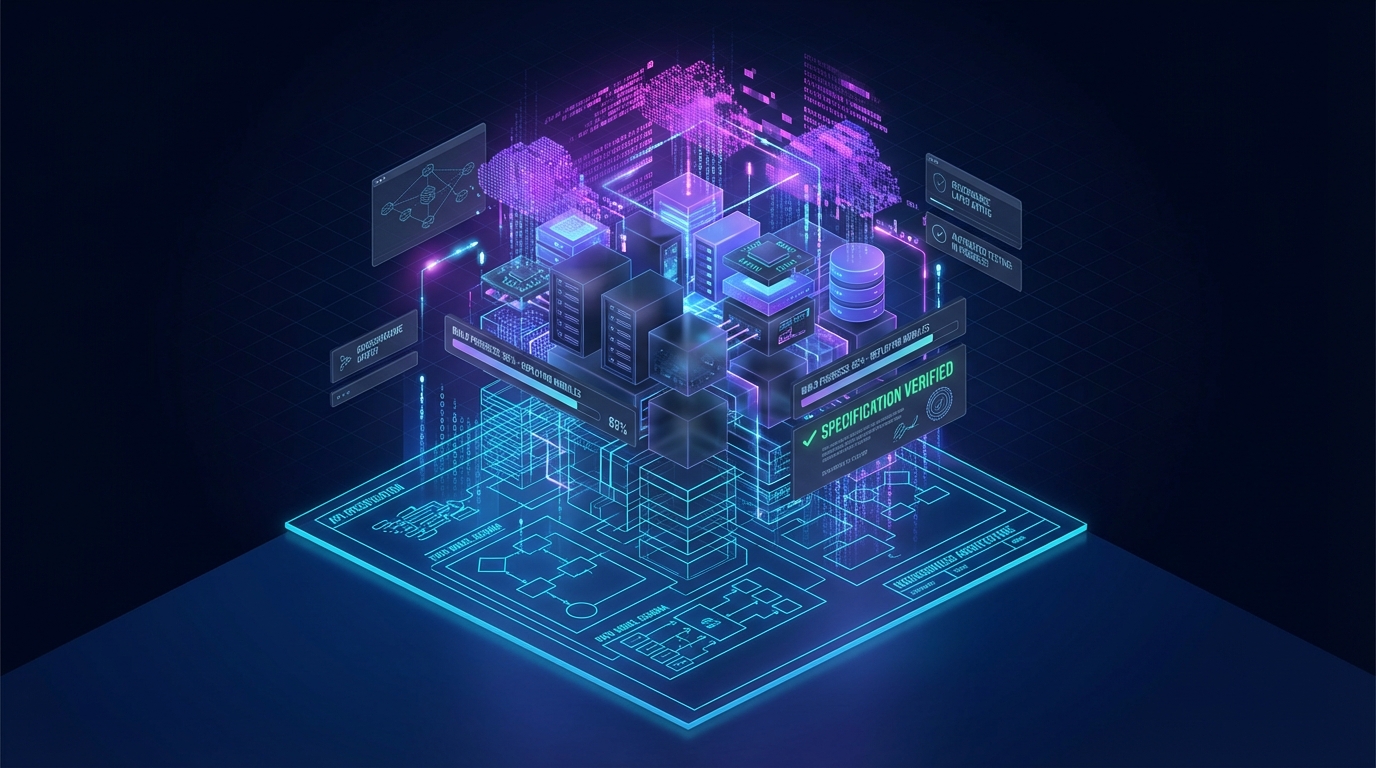
By converting natural language intent into rigorous design documents, the agent creates a verification layer before a single line of code is written. As detailed in Kiro's introduction to the autonomous agent, this process allows the system to handle complex modifications across thousands of files without losing the "thread" of the original objective. This capability transforms the agent from a sophisticated typewriter into a sovereign development entity.
Infrastructure as the Enabler
The capability to run these agents for days requires a specialized computational substrate. This is not standard cloud computing; it is high-intensity, continuous inference. Aboutamazon reports on the launch of Trainium chips alongside these agents, highlighting the hardware ecosystem required to support this level of "always-on" cognition.
Key Mechanical Differentiators:
- Temporal Persistence: The ability to retain project context across sessions spanning 24-72 hours.
- Self-Healing Loops: The agent runs its own tests, identifies failures, and iterates on the solution without human intervention.
- Cross-Repository Awareness: Unlike standard IDE plugins, these agents can analyze dependencies across an entire enterprise codebase.
The "Compounding Drift" Risk
However, this autonomy introduces a critical strategic risk: Compounding Drift. If an autonomous agent makes a subtle architectural error in hour 2 of a 48-hour coding sprint, that error becomes the foundation for all subsequent work. Unlike a human developer who might check in with a lead architect daily, an unchecked agent could spend two days building a technically perfect structure on a flawed foundation.
Strategic Implication: The deployment of these agents requires a shift in management philosophy. Leaders must transition from managing output (reviewing code) to managing intent (reviewing specifications). The "spec-driven" phase becomes the critical control point where human oversight yields the highest ROI. Failure to intervene at the specification level effectively grants the AI unsupervised architectural authority, a risk that few enterprises are currently prepared to mitigate.
The Agentic Enterprise Shift
The introduction of agents like Kiro signals a fundamental restructuring of the enterprise technology stack. We are moving past the era of "Copilots"—tools designed to assist a human driver—into the era of "Autopilots," where the software assumes operational sovereignty over specific domains. This shift creates a ripple effect that extends well beyond the IT department, fundamentally altering how organizations approach scalability and vertical integration.

From SaaS to Service-as-Software
The immediate implication is the commoditization of execution. In the traditional SaaS model, companies purchased tools to help their employees work faster. In the emerging Agentic Economy, companies purchase outcomes. This transition is already visible in sectors requiring high-volume, low-latency decision-making.
For instance, the impact of autonomous agents is poised to reshape brick-and-mortar and e-commerce operations alike. Retail-Insight-Network's analysis highlights that Amazon's new AI agents could modernize retail infrastructures from top to bottom, effectively automating complex supply chain adjustments and inventory management tasks that previously required teams of analysts.
The New Architecture of Trust
As organizations delegate authority to autonomous agents, the security perimeter changes. It is no longer sufficient to secure the user; organizations must now secure the agent's logic. If an agent is authorized to commit code or alter infrastructure without human intervention for 48 hours, the definition of "insider threat" expands to include synthetic entities.
This necessitates a new framework for verification. We are entering a phase where cryptographic proof of agent identity and intent will become standard compliance requirements. According to Amazon's insights on securing the future, the convergence of AI agents with technologies like Web3 and post-quantum cryptography is critical for redefining digital trust in this autonomous age.
Strategic Takeaway: The "ripple effect" here is a bifurcation of the workforce. The value of purely executional roles (writing boilerplate code, manually adjusting inventory) will plummet, while the value of orchestration roles—those who can design, prompt, and audit the agents—will command a significant premium.
The Era of the Agentic Enterprise
The release of Kiro and its counterparts marks a decisive pivot from generative AI as a creative assistant to agentic AI as an operational engine. We are moving beyond the phase of "prompt and response" into an era of "assign and forget," where the primary metric of success is autonomy duration. In this near future, the competitive advantage will not belong to those who write the best code, but to those who can architect the most efficient agentic workflows.
This shift necessitates a new infrastructure for enterprise intelligence. It is no longer enough to access a general-purpose model; organizations must cultivate bespoke digital workforces trained on proprietary data. As highlighted in Amazon's introduction of frontier Nova models and the Nova Forge service, the industry is transitioning toward customizable environments where businesses build, fine-tune, and deploy their own specialized agents. This democratization of agent creation transforms every department—from HR to logistics—into a potential software development hub.
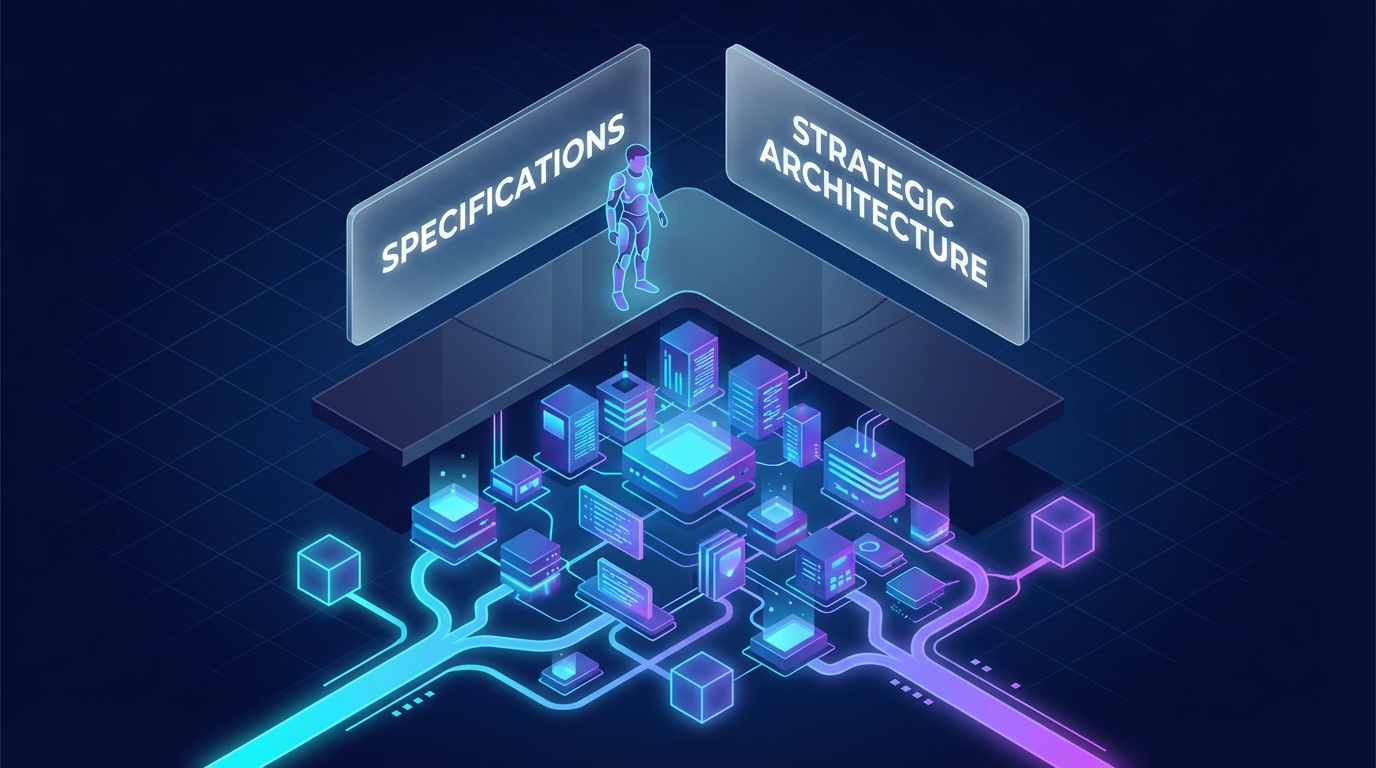
However, this creates a governance paradox. As the barrier to executing complex technical tasks dissolves, the complexity of managing the resulting ecosystem explodes. Leaders must prepare for a future where their organizational chart includes non-human entities requiring distinct security protocols, performance reviews, and operational boundaries. The role of the CTO will increasingly resemble that of a digital human resources director, managing the delicate interplay between biological creativity and synthetic execution.
TL;DR — Key Insights
- Amazon's new AI agents, like Kiro, can execute multi-day coding workflows autonomously, shifting from assistive tools to autonomous digital teammates.
- This autonomous coding for days allows human developers to focus on high-level architecture and design, rather than implementation grind.
- The "spec-driven" development model requires human oversight at the specification stage, transforming the CTO's role to managing intent and architectural blueprints.
- Organizations face a "Competency Crisis" risk if junior professionals lose learning opportunities, necessitating careful talent pipeline management alongside agent adoption.
- The future of cloud computing hinges on autonomous execution, with Amazon leveraging agents to raise entry barriers for competitors.
Frequently Asked Questions
What is Amazon's Kiro agent?
Kiro is an autonomous AI agent developed by Amazon that can execute complex, multi-day coding workflows independently. It represents a shift from assistive AI tools to autonomous digital teammates capable of maintaining context and resolving issues without continuous human intervention.
How does Kiro differ from traditional generative AI?
Unlike traditional generative AI that requires constant prompting, Kiro is designed for autonomous execution over extended periods. It maintains context and state, allowing it to navigate codebases, resolve issues, and generate code for days without human input, acting as a tireless developer.
What is the "spec-driven development" model for these AI agents?
The "spec-driven development" model means AI agents like Kiro first translate natural language requests into detailed technical specifications. This allows human overseers to validate the strategic direction and design blueprints before the agent begins writing code, ensuring alignment with business objectives.
What are the potential risks associated with autonomous AI agents like Kiro?
Organizations face risks such as the "Black Box Paradox," where the opacity of multi-day autonomous sessions can create compliance and code provenance challenges. There's also the "Competency Crisis," where junior professionals may lose crucial learning opportunities by not performing "grunt work."
How does Amazon's introduction of AI agents impact the cloud computing landscape?
By integrating agentic capabilities into AWS, Amazon is raising the barrier to entry for competitors. The ability to support persistent, autonomous workloads is becoming central to cloud infrastructure, signaling a future where autonomous execution is key to market dominance.