The Asymmetric Threat of Digital Satire
In the modern information ecosystem, narrative control is no longer solely the province of well-funded institutions. The recent acquisition of trumpkennedycenter.org and trumpkennedycenter.com by South Park writer Toby Morton demonstrates a critical shift in digital warfare: speed creates legitimacy. While the White House was navigating the bureaucratic complexities of renaming a national cultural landmark, a single satirist executed a low-cost, high-impact maneuver to hijack the digital footprint of the proposed brand before it officially existed.

This incident serves as a stark case study in anticipatory reputation management. As reported regarding the official announcement, the administration's move to rebrand the Kennedy Center was intended to be a projection of political legacy. However, by failing to secure the digital perimeter immediately, the initiative suffered a "Day Zero" exploit. According to BBC's report on the renaming announcement, the plan involved a significant shift in the institution's identity, yet the digital infrastructure to support that identity was left unguarded.
The strategic failure here is not the controversy of the name change, but the operational lag between policy announcement and digital enforcement. Morton did not hack a system; he simply leveraged the efficiency of the open market against the sluggishness of institutional bureaucracy. Newser's coverage of the acquisition highlights that Morton purchased the domains in August, months before the story gained traction, effectively "pre-bunking" the rebrand with parody content before the official narrative could even launch.
For campaign strategists and corporate reputation managers, the lesson is uncomfortable but clear.
- The Paradox of Scale: The larger the institution, the slower it moves, making it vulnerable to agile, individual actors.
- The Cost of Inaction: A $30 domain registration fee can disrupt a multi-million dollar branding strategy.
- The Satire Vector: Humor is not just entertainment; it is an insulation-stripping mechanism that exposes the absurdity of top-down messaging.
This event signals a transition from traditional protest to structural satire, where the protestor doesn't just critique the institution but physically occupies its intended digital real estate.
The Weaponization of Digital Real Estate
Political satire has evolved from ink-stained cartoons to server-side insurgencies. While the medium has shifted, the fundamental objective remains unchanged: to puncture the inflated narratives of the powerful. According to the National Park Service's retrospective on political satire, this tradition of lampooning leadership dates back to the 1880 presidential campaigns, proving that humor has always been a critical check on authority.
However, the modern iteration of this dynamic introduces a new variable: preemptive digital occupation.
Toby Morton’s acquisition of the Trump-Kennedy Center domains represents a shift from reactive commentary to proactive infrastructure control. By securing the digital territory before the official rebrand could take hold, Morton didn't just write a joke; he built the stage upon which the joke would be performed.
Asymmetric Narrative Warfare
For campaign professionals, this incident highlights a critical vulnerability in modern reputation management. Large organizations operate on quarterly cycles; individual actors operate on impulse.
- Speed vs. Process: A corporate rebrand requires legal review, stakeholder approval, and focus grouping. A domain purchase requires a credit card and two minutes.
- The Credibility Gap: Official channels are viewed with skepticism. Parody sites, oddly, often garner higher engagement because they feel "authentic" in their cynicism.
- Legal Gray Zones: While organizations often rush to claim cybersquatting, the law is nuanced regarding parody.

The Legal Friction Point
The strategy of buying domains to mock a public figure walks a fine line between free speech and illicit conduct. Navigating Cornell Law School's analysis of misleading domain names reveals the complexity: statutes like 18 U.S. Code § 2252B generally target "misleading" intent designed to deceive minors or commit fraud.
Satire, by definition, relies on the audience knowing it is a joke. If the parody is obvious, it often falls under First Amendment protection rather than trademark infringement. This creates a strategic deadlock for the targeted institution:
- Ignore it: And let the parody dominate search results.
- Sue: And trigger the "Streisand Effect," drawing vastly more attention to the satire than it would have received organically.
The Saturation Trap
There is a downside to this weaponization of WHOIS data. As political discourse moves entirely into "troll" territory, the line between legitimate dissent and engagement bait blurs.
If every political move is met with a preemptive domain squat, the internet risks becoming a graveyard of parked pages and one-off jokes. For the strategist, the challenge is no longer just securing a message, but securing the very infrastructure required to broadcast it.
The Preemptive Strike: Speculative Satire as Strategy
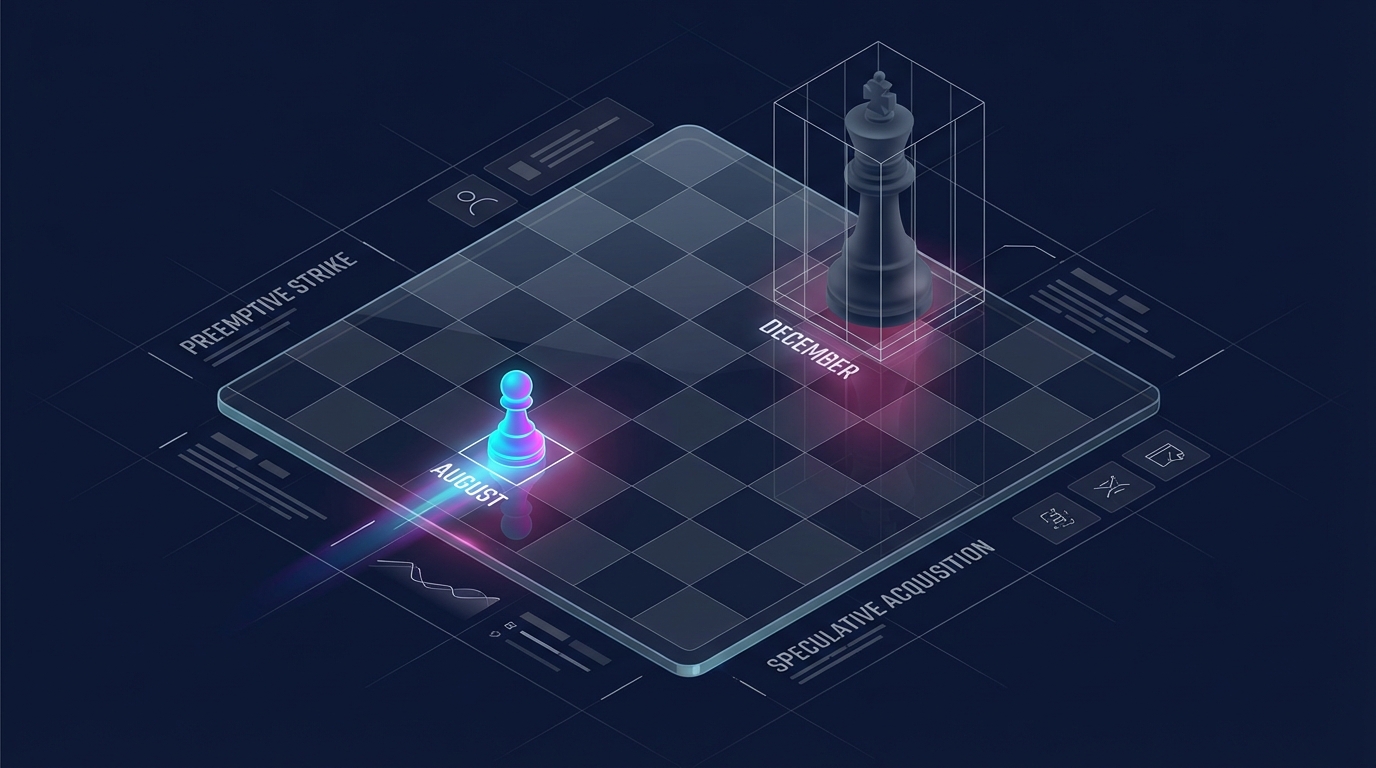
The strategic brilliance of Toby Morton’s move lies not in the humor of the parody, but in the timing of the acquisition. In the world of reputation management, speed is usually the defining variable. However, Morton inverted this dynamic by operating on a timeline of speculative acquisition.
Rather than reacting to a press release, the former South Park writer anticipated the rebranding effort months in advance. According to USA Today's report on the acquisition, Morton secured the controlling domains—specifically trumpkennedycenter.org and trumpkennedycenter.com—in August 2025. This was well before the official renaming of the Kennedy Center became a cemented political reality.
Asymmetric Digital Leverage
This maneuver serves as a textbook example of asymmetric leverage in the digital ecosystem. The disparity between the investment required to secure the asset and the cost required to reclaim it is staggering.
Consider the financial mechanics of this protest:
- Asset Cost: Approximately $15–$30 USD.
- Mitigation Cost: Potentially millions in legal fees, PR crisis management, and SEO recovery.
As noted in Livemint's coverage of the rebrand race, Morton effectively beat the administration to the digital punchline. By holding the exact URLs that the institution would logically require for a digital migration, he created a "sovereign tax" on the rebranding effort. The administration cannot simply launch a new site; they must now navigate a digital landscape where the most intuitive addresses point directly to opposition content.
The "Trojan Horse" Content Model
The core idea extends beyond simple domain squatting. Morton isn't just parking the domains; he is active-loading them with satirical content that mimics the aesthetic of the official brand while subverting the message.
HuffPost describes this as hilarious revenge, but purely from a campaign strategy perspective, it acts as a denial of service for the official narrative. When a user searches for the new institution, they are statistically likely to land on Morton’s parody first due to domain authority and click-through curiosity.
Key Strategic Outcomes:
- Brand Dilution: The "Trump-Kennedy" brand is immediately associated with satire rather than prestige.
- Traffic Interception: High-intent users looking for the official site are funneled into a protest ecosystem.
- Narrative Control: The first impression is controlled by the satirist, not the institution.
The Sustainability Paradox
However, this strategy faces a critical sustainability question: The Attention Economy Decay.
While the initial purchase creates a shockwave, maintaining the effectiveness of a parody site requires constant content updates to match the news cycle. If the site becomes static, it loses its search engine ranking dominance. Morton has successfully captured the infrastructure, but to maintain the leverage, he must now operate as a fully functioning media outlet. This shifts the burden from a one-time $30 purchase to a continuous investment of creative labor.
Unlocking the Satire Engine: The Mechanics of Digital Leverage
Toby Morton’s acquisition of the "Trump-Kennedy Center" domains is not merely a prank; it is a sophisticated exercise in Digital Real Estate Arbitrage. By purchasing the digital assets before the official rebranding could take root, Morton executed a classic "pre-emptive strike" in the information war. This strategy functions by exploiting the lag time between a bureaucratic decision and its digital implementation, allowing an individual to outmaneuver a federal institution.
The core mechanism at play here is Navigational Interception. When the public hears about the renaming, their first instinct is to search for the new name. Morton’s sites effectively capture this high-intent traffic, converting a search for official information into exposure to protest art. This turns the institution's own marketing momentum against itself, creating a "zero-marginal-cost engine" for distributing dissent.
The Legal Moat: Parody as a Defensive Shield
The sustainability of this strategy relies heavily on the legal distinctions between trademark infringement and protected speech. Campaign strategists must understand that while a brand name is protected, the First Amendment provides a robust shield for non-commercial satire.
The operational security of this campaign rests on the "likelihood of confusion" doctrine. If a user lands on the site and is immediately aware it is a joke, the legal ground for seizing the domain weakens significantly. As noted in Freedom Forum's analysis of parody protections, courts have historically grappled with the balance between property rights and free expression, often siding with satirists when the intent to critique is clear.
This creates a Litigation Paradox for the opposing side:
- Ignore it: The parody site continues to siphon traffic and control the narrative.
- Sue it: The legal action draws the "Streisand Effect," amplifying the site’s visibility and validating the satirist’s message.
The Architecture of Confusion
While the content is satirical, the domain architecture is designed to mimic authority. This creates a momentary cognitive dissonance that heightens the impact of the message. The strategy leverages the mechanisms of the Uniform Domain-Name Dispute-Resolution Policy (UDRP), where the burden of proof lies on the complainant to show "bad faith."
According to Harvard's compilation of existing domain name case law, disputes often hinge on whether the domain holder has a legitimate interest in the name—such as criticism or commentary—and is not using it for commercial gain. Morton’s background as a comedy writer strengthens the argument that the domains are vehicles for artistic expression rather than fraudulent profit centers.
The Attention Economy Fit
Finally, this strategy succeeds because it aligns perfectly with modern consumption habits. The "official" Kennedy Center website offers static institutional information. In contrast, a parody site offers "stickiness"—humor, shock value, and shareability.
- Viral Velocity: Satire travels faster on social rails than press releases.
- Engagement Depth: Users spend more time decoding a joke than reading a mission statement.
- Cultural Relevance: It speaks the language of the internet native.
This dynamic is supported by Deloitte's 2024 Digital Media Trends, which highlight how audiences are increasingly gravitating toward user-generated content and creators over traditional corporate messaging. Morton effectively bypasses the gatekeepers, speaking directly to an audience that prioritizes authenticity and entertainment over institutional prestige. The result is a highly efficient "Asymmetric Media Platform" that requires minimal capital but delivers outsized reputational impact.
The Satire Sovereign: Strategic Implications
The acquisition of "TrumpKennedyCenter.org" is not merely a prank; it is a case study in asymmetric reputational warfare. For campaign strategists and brand managers, this incident signals a critical vulnerability in modern digital infrastructure: the lag between physical rebranding and digital asset protection.
The immediate impact goes beyond a few viral laughs. We are witnessing the weaponization of the "First Mover Advantage" in the domain name space, where a $15 investment can hold a billion-dollar brand hostage.
The Legal Paradox: Protection vs. Parody
The "Efficiency Trap" for the Trump administration—or any entity facing this type of digital activism—is the legal response. While traditional trademark law protects against commercial confusion, the legal framework shifts dramatically when the intent is clearly satirical.
If the administration attempts to seize the domains via the Uniform Domain-Name Dispute-Resolution Policy (UDRP), they risk triggering a "Streisand Effect," amplifying the very message they wish to suppress. According to Freedom Forum's analysis of First Amendment protections, parody and satire occupy a protected space in American discourse, often shielding creators from liability even when they utilize the likeness or names of public figures, provided no reasonable person would mistake the parody for the original.
This creates a strategic deadlock:
- Ignore it: The parody site gains SEO authority and potentially outranks the official site.
- Sue: The lawsuit becomes a news cycle, validating the satirist’s platform.

The Psychology of "Bitter Laughter"
The long-term danger for the rebranded Kennedy Center isn't lost traffic—it's eroded authority. Satire functions as a "reputational solvent," dissolving the solemnity required for high-level political branding.
This mechanism is rooted in cognitive psychology. As noted in a government-hosted report on political persuasion and "bitter laughter," satire operates as a form of moral and affective priming. It bypasses the audience's logical defenses and frames the target as ridiculous before a serious policy debate can even begin. By owning the domain, Morton doesn't just own a web address; he owns the framing of the rebrand before the official narrative can take root.
Strategic Imperatives for Leadership
For political operatives and corporate communications directors, the implications are clear. The era of "announce then register" is over.
Actionable Intelligence:
- Defensive Domain Acquisition: Budgets must include "defensive moats"—purchasing derogatory or parody-adjacent domains (e.g., [Brand]Sucks.com) before a launch.
- Speed is Security: Digital asset registration must happen months prior to public leaks.
- The Satire Audit: Assess brand vulnerability. If your rebrand is inherently controversial, assume a "Toby Morton" is already waiting for you to slip up.
The cost of a domain is negligible; the cost of reclaiming your narrative is astronomical.
The Future of Digital Asymmetry
Toby Morton’s acquisition of the Trump-Kennedy Center domains is not an isolated prank; it is a signal flare for the future of digital reputation management. We are moving from an era of "cyber-squatting" for profit to "ideological squatting" for narrative control.
For campaign strategists and corporate leaders, the immediate future involves navigating a predictable but dangerous legal minefield. The administration may attempt to seize the domains via UDRP (Uniform Domain-Name Dispute-Resolution Policy) proceedings, alleging bad faith. However, this approach carries significant risk.
The Legal Trap Any attempt to forcibly reclaim these domains will likely trigger the "Streisand Effect," amplifying the very message the administration seeks to suppress. Because Morton is utilizing the sites for non-commercial criticism, he operates under a robust protective shield. According to Freedom Forum's analysis of First Amendment protections, parody and satire occupy a privileged space in American legal tradition, often insulating creators from trademark claims when the content is clearly transformative or critical.
The Sustainability Paradox While Morton’s tactic is a masterclass in "asymmetric warfare"—using a $15 asset to disrupt a billion-dollar rebranding—there is a hidden downside to this trend.
- Saturation Risk: If every policy shift spawns a parody microsite, the tactic risks becoming background noise rather than a strategic disruptor.
- The Persuasion Gap: While these sites generate high engagement among the base, there is little evidence they shift the needle for undecided stakeholders. They are engagement engines, not persuasion tools.
Strategic Takeaway For 2026 and beyond, the lesson is clear: Your digital perimeter is your first line of defense. It is no longer enough to own the .com; you must defensively acquire the parody, the typo, and the criticism variants of your initiative before you ever step up to the microphone.
TL;DR — Key Insights
- South Park writer Toby Morton bought parody domains for the proposed Trump-Kennedy Center, preempting official digital control.
- This highlights the vulnerability of large institutions to agile individuals due to slow bureaucratic processes versus rapid domain acquisition ($15-$30).
- Morton's strategy leverages parody's legal protections and the Streisand Effect, making institutional legal action counterproductive.
- The trend signals a shift to "ideological squatting" for narrative control, requiring proactive defensive domain acquisition by organizations.
Frequently Asked Questions
Who is Toby Morton and what did he do?
Toby Morton, a writer for the animated show 'South Park,' purchased the web addresses trumpkennedycenter.org and trumpkennedycenter.com. He plans to use these domains to host parody websites related to a proposed rebranding of the Kennedy Center.
Why is this domain purchase significant?
Morton's acquisition highlights how individual satirists can quickly seize digital real estate before official institutions, exploiting slow bureaucratic processes. His low-cost maneuver effectively hijacked the proposed brand's digital footprint before it was officially established.
What is the legal standing of parody websites like these?
Parody websites generally fall under First Amendment protections for free speech, especially when the intent to critique is clear and no reasonable person would mistake it for the official site. This makes legal action against them difficult for institutions.
What is the main lesson for organizations from this incident?
Organizations must prioritize rapid defensive domain acquisition for any new branding initiatives. The lag between a public announcement and securing digital assets leaves them vulnerable to preemptive actions by individuals, requiring proactive digital perimeter protection.