The $19.5 Billion Pivot: Rethinking the EV Roadmap
The abrupt discontinuation of the F-150 Lightning represents more than just a change in a product lineup; it is a seismic shift in the automotive sector's strategic calculus. For years, the industry operated under the assumption that a direct transition from internal combustion to battery electric vehicles (BEVs) was inevitable and imminent. Ford’s retreat signals a harsh correction to that trajectory, driven by a collision between ideological ambition and hard market data.

The Ideology vs. Reality Gap
The core issue isn't the technology, but the adoption curve. Ford bet heavily on the Lightning serving as the bridge for mass-market truck buyers to embrace electrification. However, the market has spoken, revealing a critical gap between early adopter enthusiasm and mainstream practicality.
The financial toll of this misalignment is staggering. Ford’s electric vehicle division has faced massive headwinds, culminating in a reported $19.5 billion hit to the bottom line. This financial pressure forced a re-evaluation of the "pure EV" strategy, proving that operational leverage cannot be sustained when production costs outpace consumer willingness to pay. As noted in recent reports, NPR’s analysis of the production halt highlights that Ford is now aggressively pivoting toward hybrids to stop the bleeding.
The Rise of the EREV Strategy
This isn't an abandonment of electrification; it is a strategic evolution toward the Extended-Range Electric Vehicle (EREV). The "pure" EV model failed to address the specific anxieties of the truck demographic—towing capacity and range reliability.
By integrating a gas generator into the next iteration, Ford is acknowledging that the infrastructure gap is still too wide for heavy-duty users. This move allows Ford to maintain an "electric-first" driving experience while eliminating range anxiety, effectively creating a safety net for hesitant consumers. According to TechCrunch’s report on the strategic pivot, this shift away from large, battery-only EVs signifies a broader industry realization: the path to zero emissions will likely be paved with hybrid solutions, not immediate replacements.
Strategic Takeaways:
- Market Timing: Being first is less important than being right about consumer readiness.
- Transitional Technology: Hybrids and EREVs are not just stopgaps; they are essential market stabilizers.
- Capital Discipline: Ideological commitments must yield to financial sustainability when losses exceed $19 billion.
The Hybrid Renaissance: A Strategic Market Correction
The discontinuation of the fully electric F-150 Lightning represents a pivotal moment in automotive history, signaling a shift from ideological purity to operational pragmatism. For campaign analysts and industry strategists, this move dismantles the linear narrative that the transition from internal combustion to electrification would be seamless and immediate. Instead, we are witnessing a "strategic recalibration" where the market dictates that utility must precede novelty.

The Efficiency Trap of Heavy-Duty EVs
The core friction point for the Lightning was never performance—it was the physics of utility. While early adopters were captivated by the technology, the mass market faced a different reality: the "towing penalty." Towing heavy loads drastically reduces EV range, creating a logistical nightmare for commercial users who rely on uptime.
This disconnect between product capability and user requirement created a massive inventory backlog. As noted in New York Times's analysis of the cooling market, the initial "hot demand" rapidly evaporated once the enthusiast demographic was saturated, leaving dealers with expensive inventory that mainstream truck buyers were hesitant to touch.
Why the "Pure EV" Model Stalled:
- Infrastructure Deficits: Public charging networks remain insufficient for commercial fleets operating on tight schedules.
- Cost-to-Utility Ratio: The premium price point could not justify the operational downtime required for charging during long hauls.
- The Range Paradox: Increasing battery size to improve range adds weight, which in turn reduces efficiency, creating a diminishing return on investment.
Redefining the "Transitional" Narrative
Ford’s pivot to Extended Range Electric Vehicles (EREVs) validates a crucial strategic insight: hybrid technology is not merely a bridge to the future; for the heavy-duty sector, it is the foreseeable future. By integrating a gas generator to recharge the battery, Ford effectively eliminates the "range anxiety" that paralyzed potential buyers.
This move forces competitors and policymakers to rethink their roadmaps. Wired's report on Ford's rethinking of ambitions suggests that the industry is waking up to a hard truth: forcing a single technological solution (BEV) across diverse use cases (commuting vs. heavy hauling) is a strategic error.
Strategic Implication: For decision-makers outside the auto industry, the lesson is clear. Do not let "innovation theater" blind you to end-user realities. Ford’s willingness to kill a flagship product to save the bottom line is a masterclass in prioritizing financial sustainability over sunk costs.
The Profitability Paradox: When Innovation Hits a Wall
The discontinuation of the all-electric F-150 Lightning isn't just a product cancellation; it is a correction of a fundamental misalignment between corporate ambition and market reality. For years, the automotive sector operated under the assumption that EV adoption would follow a linear, exponential growth curve. Ford’s decision proves that the curve is actually a step-function, and the industry just missed a step.
The core issue isn't the technology itself, but the unsustainable unit economics of scaling it before the supply chain and consumer base were ready. While the Lightning was a critical darling, the financial backend painted a grim picture.
According to reports on the company's restructuring, Ford is taking a $19.5 billion hit on its EV division, a staggering figure that underscores the cost of forcing a market transition. Indiatimes's analysis of Ford's financial impact highlights that halting production was likely the only viable path to stop the bleeding. This is the "Profitability Paradox": the more units Ford produced to capture market share, the more money they lost per vehicle.

The Early Adopter Cliff
The initial success of the Lightning created a false positive for Ford's strategists. They mistook the enthusiasm of early adopters—who are price-insensitive and forgiving of infrastructure flaws—for mass-market readiness. Once that initial pool of buyers was exhausted, demand didn't just taper; it evaporated.
The gap between "wanting" an EV and "buying" an electric work truck became a chasm. GoodCarBadCar's breakdown of production reduction notes that Ford had to slash production targets as inventory began to pile up on dealer lots. The mass market demands utility and reliability without compromise, and the current BEV (Battery Electric Vehicle) infrastructure could not guarantee that for heavy-duty users.
Key Friction Points for Mass Adoption:
- Charging Downtime: Commercial fleets cannot afford 45-minute charge breaks.
- Towing Range: Battery efficiency plummets when towing heavy loads.
- Price Parity: High interest rates made the premium for EVs harder to justify.
The Pragmatic Pivot: EREV
Ford’s response is not a retreat from electrification, but a shift toward pragmatic propulsion. The replacement strategy involves an Extended-Range Electric Vehicle (EREV) system. This architecture keeps the electric drive experience but reintroduces a gas engine solely as a generator to recharge the battery, decoupling the vehicle from the charging grid during long hauls.
This effectively solves the "towing trauma" experienced by Lightning owners. As detailed in InsideEVs's report on the new gas engine integration, the next generation will utilize this onboard generator to offer the torque of an electric motor with the refueling convenience of a gas truck.
Strategic Takeaway: Ford is acknowledging that for the next decade, the "killer app" for trucks isn't zero emissions—it's zero compromise. The EREV model allows Ford to bypass the infrastructure bottleneck while still claiming an electrified future.
The Profitability Paradox: When Scale Bleeds Cash
The discontinuation of the F-150 Lightning isn't just a product cancellation; it is a correction of a fundamental miscalculation in automotive unit economics. For years, the prevailing logic in the EV sector has been that volume cures all ills. The theory suggested that if you manufacture enough units, the cost per vehicle drops, and margins materialize.
Ford found itself caught in a "Scale Trap." Instead of achieving economies of scale, the company encountered a scenario where increasing production velocity simply accelerated financial losses.
The False Signal of Early Adoption
The core mechanics of this failure began with a misleading data signal. Initially, the market appetite appeared insatiable. Ford looked at the pre-order numbers and interpreted the enthusiasm of early adopters as a proxy for the mass market.
Driven by this optimism, CBT News reported that Ford doubled its production targets, aggressively ramping up supply chains to meet a projected demand that, in reality, had a very shallow ceiling. This is a classic "Early Adopter Cliff." Once the tech-enthusiasts and fleet pilots had their trucks, the mainstream buyer—sensitive to price and charging logistics—did not show up in the expected numbers.

The Operational Drag
The mechanics of the F-150 Lightning’s demise were also deeply rooted in operational inefficiency. The truck was built on a modified internal combustion platform rather than a dedicated EV architecture. This created "engineering bloat," making the vehicle expensive to build and complex to assemble.
The financial consequences were severe. Rather than the EV division becoming a profit center, AP News highlights that mounting losses and falling demand forced Ford to reassess the viability of the entire program. The company faced a paradox where selling more trucks actually hurt the bottom line due to negative gross margins on each unit sold.
The Product-Market Mismatch
Critically, the failure wasn't necessarily that the Lightning was a "bad" vehicle. The mechanical breakdown occurred in the positioning. Ford attempted to sell a high-tech lifestyle product to a demographic that values utility, range reliability, and cost-efficiency above all else.
This suggests the issue was less about engineering incompetence and more about a strategic disconnect. As analyzed by TorqueNews, the discontinuation represents a "tragic marketing failure" rather than a product indictment. The Lightning was marketed like a Tesla (focused on 0-60 times and tech features) rather than like a Ford F-150 (focused on towing, hauling, and relentless reliability).
Key Strategic Frictions:
- Infrastructure Reality: The charging network wasn't ready for towing-heavy use cases.
- Cost Barrier: The price point remained too high for the average fleet manager.
- Platform Limitations: Using a legacy chassis limited battery efficiency compared to ground-up EV designs.
Strategic Takeaway: Ford’s retreat proves that legacy brand equity does not guarantee EV success. The mechanics of the market have shifted from "growth at all costs" to "profitable growth only," leaving no room for vehicles that cannot carry their own weight on the balance sheet.
The Strategic Pivot: From Pure EV to Practical Utility
Ford’s decision to halt the Lightning creates a vacuum in the pure-play EV truck market, but it simultaneously validates the "utility pragmatism" thesis long ignored by EV purists. This isn't merely a product cancellation; it is a recognition that the use-case gap between lifestyle EV owners and heavy-duty fleet operators is currently too wide for a single battery-electric platform to bridge.
The Rise of the "Super Hybrid"
The immediate successor to the Lightning's market position is not another BEV, but an Extended-Range Electric Vehicle (EREV). This technology integrates a gas generator specifically to recharge the battery while driving, effectively decoupling range limits from charging infrastructure availability. According to Forbes's analysis of the lineup strategy, this pivot allows for "700+ miles of range," neutralizing the towing anxiety that paralyzed fleet adoption.
This move signals a shift from ideological engineering (zero tailpipe emissions at all costs) to pragmatic engineering (maximum utility with reduced emissions). For campaign strategists in the energy sector, this reinforces the longevity of liquid fuels as a "strategic battery" for heavy industry.

Project T3: The "Clean Sheet" Advantage
The discontinuation of the current Lightning clears the manufacturing decks for "Project T3," Ford's next-generation electric truck. The first-generation Lightning suffered from "conversion compromise"—it was an internal combustion chassis retrofitted with batteries.
As detailed in TopElectricSUV's report on future developments, Project T3 represents a ground-up software-defined vehicle. By starting from scratch, Ford aims to radically simplify manufacturing complexity, reduce the drag coefficient, and integrate a digital operating system that legacy chassis architectures simply cannot support.
The Innovation Paradox
However, this strategic correction carries a significant "Osborne Effect" risk. By announcing the death of the current model and promising a superior future solution (EREV and T3), Ford risks freezing its own sales pipeline in the interim.
Potential Downsides:
- Asset Depreciation: Existing Lightning owners face immediate drops in resale value, potentially damaging brand loyalty.
- Dealer Fatigue: Dealerships that invested heavily in EV certification for the Lightning may hesitate to support the next iteration.
- Competitor Opportunity: Rivian and Tesla gain a temporary window to capture disaffected pure-EV loyalists who view the move to EREV as a regression.
Strategic Implication: The era of "compliance cars" is officially over. Manufacturers must now build EVs that outperform internal combustion engines on utility metrics (towing, range, uptime), not just environmental ones.
Navigating the Post-Lightning Landscape
The cancellation of the F-150 Lightning isn't just a product discontinuation; it is a signal flare marking the end of the "Early Adopter" phase of electric trucking. For fleet managers, investors, and automotive strategists, the focus must shift from pure electrification fervor to pragmatic utility optimization.
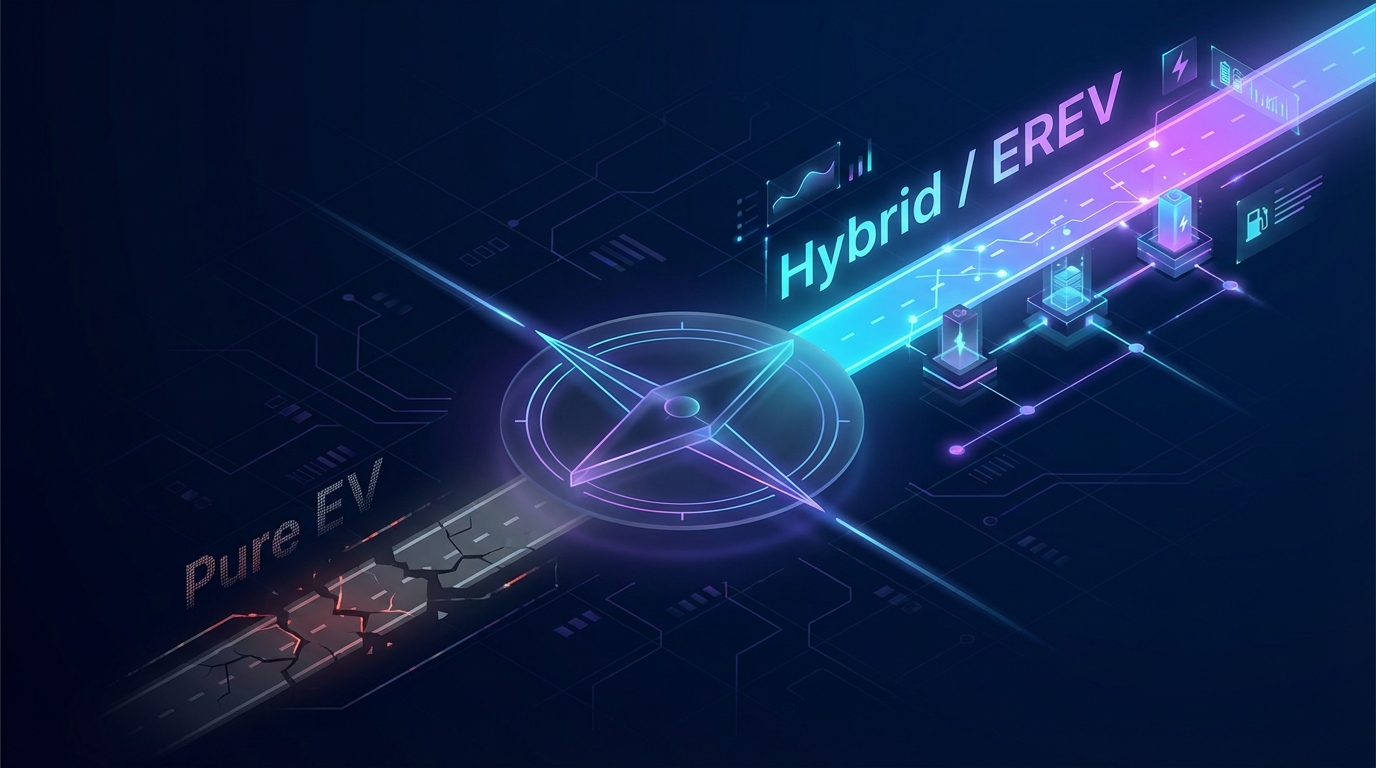
As InsideEVs confirms the F-150 Lightning is officially dead, stakeholders are left holding a depreciating asset in a shifting ecosystem. The strategy now requires a pivot from ideological purchasing to operational reality.
Strategic Action Plan
- For Fleet Operators: Halt aggressive pure-EV truck procurement. The infrastructure-to-utility ratio hasn't stabilized. Pivot capital expenditure toward the incoming EREV (Extended Range Electric Vehicle) models, which promise to bridge the gap between zero-emission mandates and actual towing range requirements.
- For Current Owners: Resist the urge to panic sell. While resale values will take a short-term hit due to the "orphan car" status, the Lightning remains a capable platform for local duty cycles. However, anticipate long-term service bottlenecks as supply chains pivot to the new T3 platform.
- For Investors: Look for the "Hybrid Bridge." Ford’s retreat suggests that the industry overestimated the speed of the transition. Smart money is moving toward suppliers who specialize in flexible powertrains rather than pure-play battery dependency.
The Innovation Paradox
The trap here is assuming the upcoming EREV is the "perfect solution." By reintroducing an internal combustion generator to charge the battery, Ford solves the range anxiety issue but reintroduces mechanical complexity and maintenance costs that EVs were supposed to eliminate. The "Zero-Maintenance" promise of the original Lightning is gone; the future is more versatile, but undeniably more complex.
TL;DR — Key Insights
- Ford halted F-150 Lightning production due to $19.5 billion in EV losses, signaling a pivot from pure EVs to hybrids.
- Mainstream truck buyers prioritize utility and range reliability over pure EVs, creating an adoption gap.
- Extended-Range Electric Vehicles (EREVs) are now Ford's strategy to address range anxiety and towing needs for heavy-duty users.
Frequently Asked Questions
Why did Ford stop producing the F-150 Lightning?
Ford halted F-150 Lightning production primarily due to significant financial losses in its EV division, totaling $19.5 billion. The decision reflects a market reality where mainstream truck buyers prioritize utility and range over pure electric capability.
What is Ford's new strategy for electric trucks?
Ford is pivoting towards Extended-Range Electric Vehicles (EREVs), which incorporate a gas generator to recharge the battery. This strategy aims to address range anxiety and towing capacity concerns for heavy-duty truck users, offering a more practical solution.
What are the main reasons for the F-150 Lightning's market challenges?
Key issues include insufficient charging infrastructure for heavy-duty use, the significant reduction in battery range when towing, and a high cost-to-utility ratio for mainstream buyers. These factors created a gap between early adopter enthusiasm and mass-market demand.
How does the new EREV strategy differ from the pure EV Lightning?
EREVs maintain electric driving but use a small gas engine to recharge the battery, eliminating range anxiety and the need for frequent charging stops, especially when towing. This offers a compromise between electric benefits and traditional refueling convenience.